Super Rugged vs. Semi-Rugged Industrial Computers
What’s the Difference and Which One Do You Need?
In the world of edge computing, not all ruggedness is created equal. From high-heat factories to dusty warehouse floors and remote outdoor installations, edge deployments demand computers that are purpose-built for durability and reliability. Depending on the deployment environment, choosing the right level of ruggedization for industrial computer can mean the difference between seamless performance, costly downtime, and most importantly, cost savings.
Super Rugged and Semi Rugged
Industrial edge (semi-rugged) is a more economical and basic design, whereas rugged edge (super-rugged) design prioritizes durability and deployment adaptability.
Understanding the Industrial and Rugged Edge
The industrial edge typically offers higher performance throughput due to more lenient environmental constraints while the rugged edge faces more challenging environments that impose stricter deployment constraints and limitations. Let’s briefly go over how each edge computer component is selected when determining its industrial or rugged edge deployment.
| Industrial | Rugged | |
|---|---|---|
| Deployment Environment | Controlled (Accessible, stationary, standard, on-prem) | Extreme (Remote, mobile, customized, off-prem) |
| Performance | CPU: Flexible (Core/XEON) GPU: FHFL, high-performance | CPU: Power Efficient, Controlled (Intel Embedded TE Processors) Performance Accelerators: Low TDP, SFF, industrial grade NVIDIA Jetson |
| Environmental Challenges (Temp., Shock/Vibration, Power) | Wide Operating Temp Fanned & Fanless Passive & Active Cooling | Widest Operating Temp. Fanless Passive Cooling MIL-STD-810G |
| I/O Connectivity | Ubiquitous IoT connectivity | EDGEBoost Technology: Application-specific customization, performance acceleration, & I/O connectivity |
| Wireless Connectivity | In-band & Out-of-band Private and public networks | Out-of-band Public networks |
Super Rugged Industrial Computers
Super Rugged computers are designed for the harshest edge environments, where exposure to shock, vibration, debris, and wide temperature swings is routine. Many of these systems will typically feature:
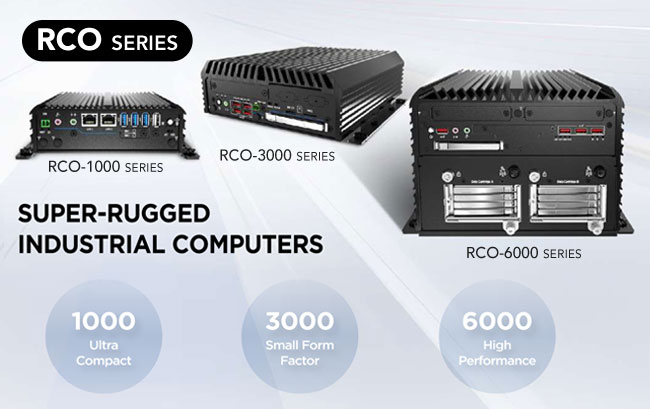
RCO-Series
- Completely fanless and cableless designs
- Wide operating temperature ranges (often -25°C to 70°C or wider)
- Fully sealed enclosures for dust and water protection
- High shock and vibration resistance (MIL-STD-810G compliance)
- Expansion for performance at the edge, like AI accelerators, NVMe storage, or wireless modules
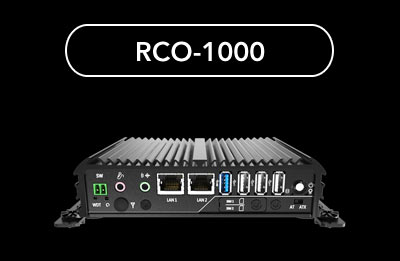
Intel Atom® Processors
- Up to 3x EDGEBoost I/O
- Lite AI Performance
- Up to 2x PoE and 2x LAN RJ45
- Wide Operating Temperature -40°C up to 70°C
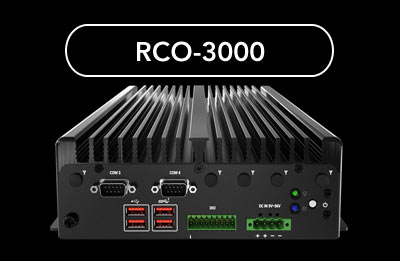
Intel® Core Processors
- 1x EDGEBoost I/O
- Mid-AI Performance
- Up to 4x PoE RJ45/M12
- Wide Operating Temperature -25°C up to 70°C
- EN50155 (EMC) Certified
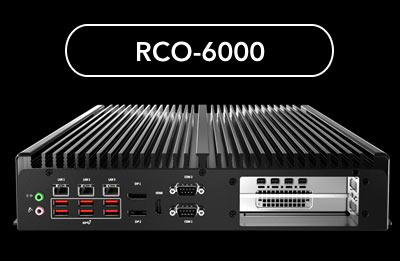
Intel® Core Processors
- 2x EDGEBoost I/O
- High-AI Performance
- Up to 8x PoE RJ45/M12
- EDGEBoost Nodes Compatible for SSD, GPU and PCIe expansions
- Wide Operating Temperature -25°C up to 70°C
Semi-Rugged Industrial Computers
On the other hand, Semi Rugged computers are ideal for controlled industrial environments where performance and durability are still critical, but the conditions aren’t as extreme. These systems offer:
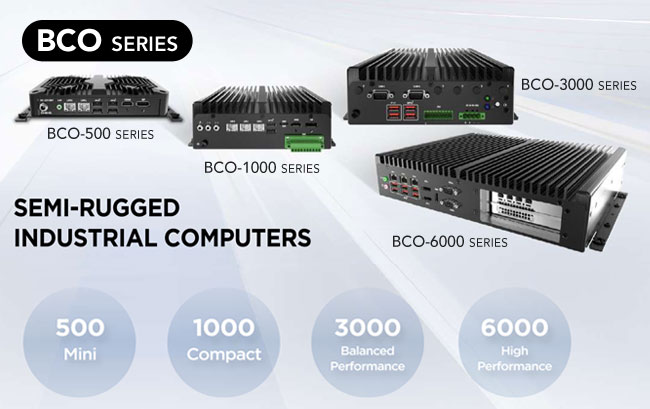
BCO-Series
- Compact, fanless designs (may have cables)
- Moderate temperature tolerance (typically 0°C to 50°C)
- Essential, fixed I/O for industrial automation
- Cost-efficient ruggedization for scalable deployments
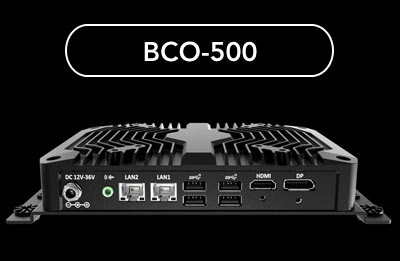
Intel® Alder Lake / Intel® Atom® Processors
- Mini Form Factor
- High-Speed I/O Ports and Wireless Connectivity
- Competitive Price and Long Lifetime Support
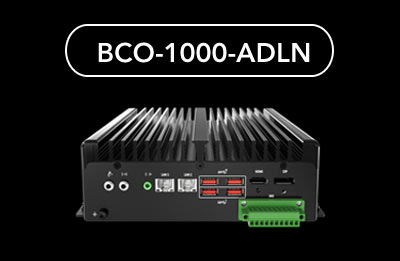
Intel® Alder Lake / Intel® Atom® Processors
- Power Efficient 12W Performance
- Digital and Analog I/O Connectivity
- EDGEBoost I/O Technology
- Competitive Price and Long Lifetime Support
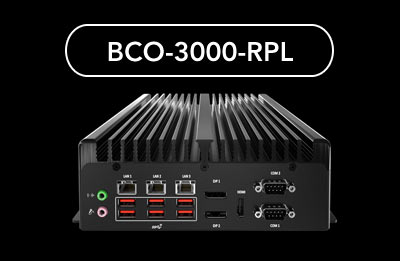
Intel® Core Processors
- Powerful 35W Edge Performance
- Rich I/O Ports and M.2 Expansions
- Up to Triple Displays / Triple RJ45 LAN Ports
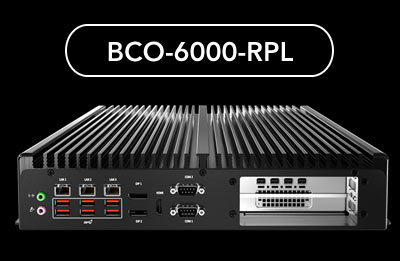
Intel® Core Processors
- Powerful 35W Edge Performance
- Rich I/O Ports and M.2 Expansions
- 2x PCIe Gen 4 Slots with GPU Support
BCO and RCO Series: Industrial Workstations for Edge Computing
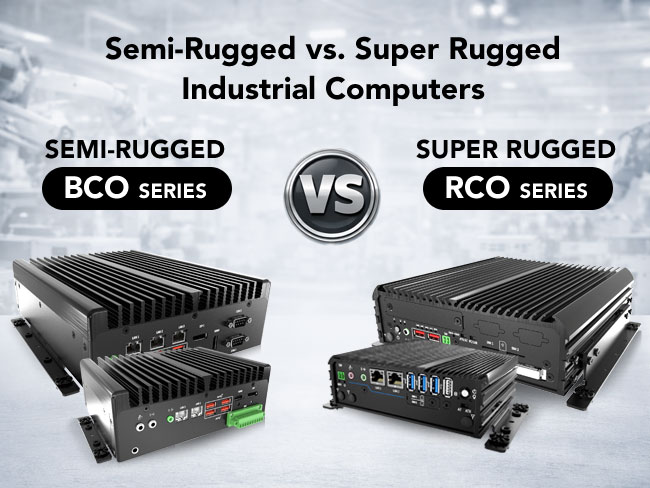
BCO and RCO Series are edge computers that serve the same purpose: drive real-time processing and consolidate IoT devices. Both are designed to tackle edge applications in their own unique way and exemplify the Super Rugged and Semi Rugged design.
The BCO Series follows an industrial edge/semi rugged design concept, delivering cost-effectiveness and simplicity for industrial applications. Meanwhile, the RCO Series is tailored with rugged edge/super rugged designs, emphasizing extreme durability and deployment flexibility through EDGEBoost technologies for more challenging industrial applications.
Let’s break down the key similarities and differences between the two series.
Both the BCO and RCO Series, excluding a GPU Integrated BCO-6000 Series & RCO-6000 Series, follow a completely fanless design for enhanced durability and reliability. The RCO can withstand much wider operating temperatures than the BCO due to its fully ruggedized design, whereas the BCO has a much simpler industrial design.
Due to the design concept of the BCO, many of its I/O is pulled out through cables whereas the connectivity on the RCO is implemented all on-board for a flush cableless design. In extreme edge deployments, cables become a point of failure due to possible detachment or malfunctions. Although rare, this does pose a vulnerability and has been mitigated within the RCO Series.
In addition, the RCO Series provides a slightly wider power input range and offers on-board power protection. In mission-critical deployments where dirty power is present, power protection is essential to safeguard the integrity of the industrial computer.
 |  | |
| Fanless Design | BCO-1000, BCO-3000, & BCO-6000 | RCO-1000, RCO-3000., & RCO-6000 |
| Cableless | No | Yes |
| Operating Temperature | 0°C–50°C | -40°C–70°C |
| Shock & Vibration | MIL-STD-810G | MIL-STD-810G |
| Power Input Range | 9~36VDC / 12~36VDC | 9~48VDC |
| Power Protection | None | OVP (Over Voltage Protection) OCP (Over Current Protection) Reverse Protection |
Semi-Rugged Use Cases: Industrial Edge Deployments
Semi-rugged computers are ideal for industrial edge environments that are accessible, stationary, and relatively controlled. These systems balance durability and cost efficiency while supporting scalable Industry 4.0 deployments.
Factory Automation & Production Lines
In manufacturing facilities, edge computers are often installed inside control cabinets or mounted near machinery. These systems support PLC integration, HMI interfaces, and real-time process monitoring under stable power and temperature conditions. Semi-rugged platforms provide dependable performance without unnecessary overengineering.
Industrial IoT Gateways & Data Aggregation
Many edge deployments focus on consolidating sensor data from machines, meters, and controllers before sending it upstream. Semi-rugged computers offer rich I/O, industrial connectivity, and long lifecycle support for always-on, on-prem industrial environments.
In-Line Inspection & Quality Control
Indoor vision systems used for inspection and defect detection typically operate in fixed positions with predictable conditions. Semi-rugged systems deliver the processing power needed for image analysis while remaining compact and cost-effective for multi-line deployments.
Warehouse & Logistics Infrastructure
Warehouse automation relies on edge computing for conveyor control, inventory tracking, and system coordination. Semi-rugged designs handle continuous operation in environments with moderate dust and vibration while remaining easy to deploy and maintain.
Super Rugged Use Cases: Rugged Edge Deployments
Super rugged computers are designed for extreme edge environments where system failure can disrupt operations or compromise safety. These deployments demand maximum durability and long-term reliability.
In-Vehicle & Mobile Computing
Vehicle-based systems face constant vibration, motion, and wide temperature swings. Super rugged, fanless, and cableless designs reduce points of failure and ensure reliable performance for fleet telematics, mobile command units, and autonomous platforms.
Outdoor Infrastructure & Roadside Cabinets
Edge systems deployed outdoors must withstand heat, cold, moisture, and unstable power. Super rugged computers are built to operate reliably in remote roadside cabinets and infrastructure installations where maintenance access is limited.
Rugged Security & Surveillance
Distributed surveillance deployments often rely on localized processing for real-time analytics. Super rugged systems support high-bandwidth connectivity and AI acceleration while maintaining uptime in harsh or unattended environments
AGV & AMR On-Vehicle Compute
Autonomous robots require real-time decision-making while operating in vibration-heavy and dynamic conditions. Super rugged platforms provide the durability and expansion flexibility needed to support sensors, AI inference, and long-term operation.
Conclusion – Which One is Right for You ?
In the ever-evolving landscape of edge computing, the choice between super rugged or semi-rugged solutions is pivotal for ensuring optimal performance and durability in various deployment scenarios. Our BCO and RCO Series stand out as prime examples of cutting-edge computing solutions, each catering to distinct needs and requirements.
The BCO Series, with its industrial edge design, offers a cost-effective and straightforward solution ideal for industrial applications where simplicity and efficiency are paramount. On the other hand, the RCO Series, boasting rugged edge design and Premio's exclusive EDGEBoost technologies, provides unparalleled durability and deployment flexibility, making it the go-to choice for challenging industrial environments.
By embracing edge computing with BCO or RCO Series, organizations can unlock the full potential of real-time data processing, minimize latency, and enhance operational reliability and productivity. Whether it's driving AI workloads or consolidating IoT devices, these edge computers pave the way for streamlined data analytics and actionable decision-making, essential for today's latency-sensitive applications.